Portfolio
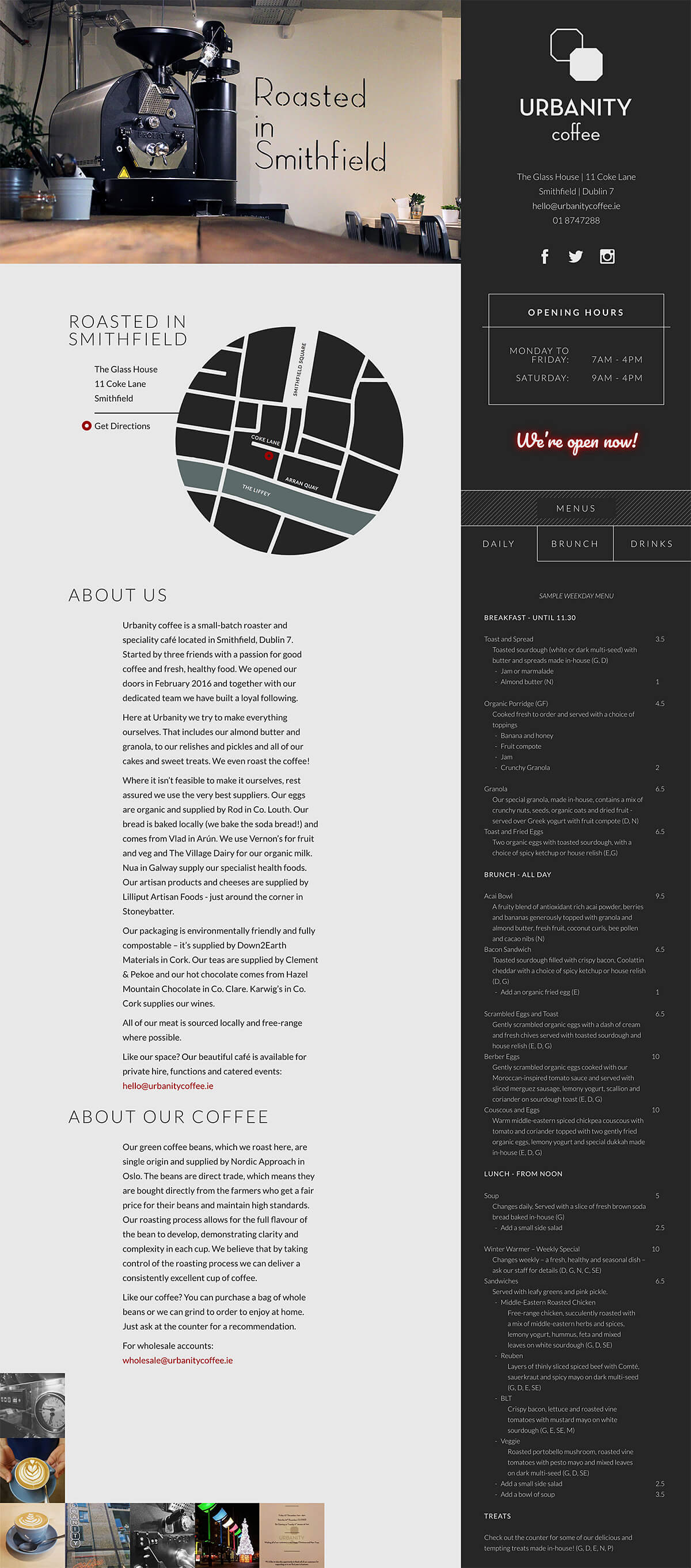
Homepage for musician Thomas Kitt. Includes news, guestbook, image gallery, mailing list, etc. All running on Textpattern.
Online writing of Damhnait Gleeson, who searches for aliens, has gone on fieldword expeditions to the Artic, traveled through Southeast Asia, and written about it all on her website.
This HTML and CSS based layout was accepted as an official design of the CSS Zen Garden showcase.
It combines organic, earthy tones with a unique layout, concentrating content in the right side of the screen, as opposed to the usual centre or left alignment.
I can honestly say that this is the most original design I have ever created. While not particularly practical in many respects, it succeeds in the task of applying CSS to unusual and inventive ends. This is the core objective of the CSS Zen Garden.
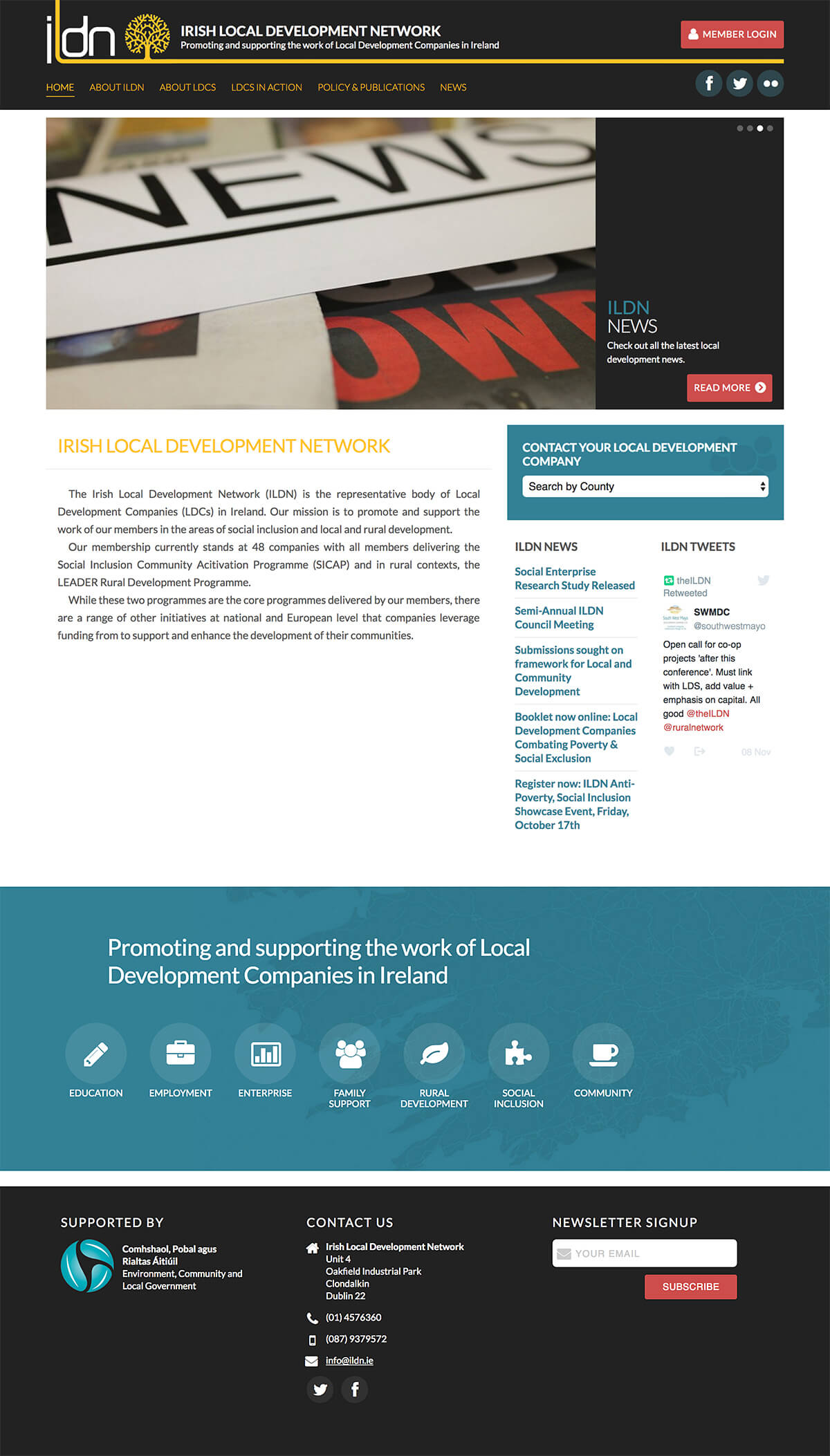
Single page design for the static page of the Traveller Accommodation Unit in Dublin City Council. A core focus on clarity and legibility.
Currently residing in a pre-implementation limbo.
This was designed as an entry to the Css Zen Garden, a showcase for graphics based css design. It was listed in their design list, but not as an official submission. Probably due to its bland sensibilities. Hopefully time will be made in the future for the creation of something more eye catching.
I would never design something this colour for my own use.
On Web Standards
Frequenting the portion of the web that I do, it’s easy to get the impression that designing with web standards has passed through into the majority, that the day is won, and that nobody needs to write any more articles about why they are a good idea. Then I meet another webdesigner, see another high-profile site launch in this country or go on some course with a random sampling of people in the industry. The impression is quickly quashed. Respected, award winning companies in this country are still hacking together pages using tables and spacer gifs. CSS is used by most, but only for font formatting and link colours.
Some years ago I read an article warning of the dangers of our ever-changing mediums of digital information storage. All digital information currently being created faced an uncertain future. 8” floppy disks have been replaced by 1.44” disks. Records by tapes. All of these by the ubiquitous CD. Now DVD writers are becoming commonplace. Memory sticks, external hard drives. Ever-changing technologies using ever-changing transfer protocols. Have you ever tried to find something to read the data off a hole-punch card from the 60’s? I have old Atari cartridges at home with no means of accessing the games on them. It’s all information, and it’s all effectively gone, forever.
What does this have to do with webdesign, and web standards? It’s about permanence. The original designers of HTML (the computer code used to create web pages) made an open ended language, one that would be just as readable to computers in 2050, or in 2250. The Internet gives us a chance to create sustainable, permanent digital information that will never die. It is too widely distributed to be destroyed. We can back-up libraries, catalogue museums and change the nature of education forever.
Then, in the mid-90’s, webdesign happened. And it was a good thing. The Internet exploded with colour and images. Businesses realised the huge potential of webpages. Everyone got over-excited and the dotcom bubbled. Unfortunately, this explosion of growth was based on a compromising of the HTML language. A hack was invented which meant you could drop text and images anywhere on the page, and assign colours to any portion of the page. It was the only way it could be done at the time and it broadened the web’s horizons hugely. But it rendered the language essentially meaningless. Semantics were lost. It is analogous to everyone stopping writing in paragraphs, and every book becoming a collection of graphic posters, with surface structure only, impossible to navigate easily. Search engines stopped being able to read pages properly; they look at the code behind a page.
In the last number of years there has been a pull back towards semantic, legible HTML, under the title of standards-based design. The technology has finally become available to allow the styling of properly formed HTML documents. These pages can look as good as any other kind of webpage, but underneath the hood is a clean, clear file that will remain readable by any simple text browser for the foreseeable future. Permanence is achieved, if not for the design, then for in the information at least. Many argue that design and function are inseparable. Design and content are not discrete, but nor are they intimately bound. Design is not the milk in your tea. It is the jam on your bread.
So if standards-based design is so hot, why isn’t everybody doing it? Because it’s hard to push against well-established techniques which, for all intents and purposes, still work today. Browsers haven’t abandoned their support of table-based layouts. They never will. There is also still a perception that standards-based design is limited and difficult, which it really was when the concept was introduced a half a decade ago. These days it is a misconception. CSS is as easy, and in many ways easier, than old-school design techniques. I have worked with both and the consistency and clarity of standards-based design as a development tool wins out every time.
I program sites using web-standards. I am not fanatical about it. I do not require every page to validate strictly. I am not against flash, used correctly. I understand that not every page I make needs to be a permanent monument against time. But why drop principles for non-essential projects? There is a satisfaction in a job done right, whatever the subject of the site. But mostly, I do it this way because I changed and I can’t change back. Who would want to?
Do You Hate Flash?
Of course not. Flash is a wonderful tool. You have seen Levitated, right? It's just that people are misusing it horribly all the time. They don't seem to realise what they are sacrificing when they replace a degradable, navigable HTML menu with a near-identical Flash menu that gives no more advantage than a couple of discardable animations.
It's a pity, because most talented graphic designers are producing Flash sites, many of which use very few animation effects. These could just as easily be produced as standards-based HTML. This probably stems from a desire to control appearances. Using Flash gives more control over fonts and layout, in a certain sense. Coming from a background in print design, this would appeal more to many graphic designers, who would prefer not to give in to the variation and flow that is an essential part of designing for the web.
It seems ironic that graphic designers, who so often paint themselves as an independent, trend-setting group, are so willing to wrap up their online presence in a corporate product rather than the truly independent mediums that the Internet was founded upon.
To return to the point, Flash is great for displaying image galleries, providing dynamic graphical layouts and a myriad of other tasks. There's also a place for full-flash sites. Experimentation is allowed. But for building complete, publicly accessible sites, the costs far outweigh the benefits.
Flash is a tool, not a website.
Resources
Typography
- 5 Simple Steps to Better Typography
- Dieter Steffmann
- Know Your Type
- Typographica
- Typophile
- Web design is 95% Typography
- Web Typography
Web Design
Designers
Why Isn't This Page a Liquid Layout?
Liquid layouts adversely affect the readability of online information by making line-lengths variable. With a liquid layout and a large monitor, you can have lines with fifty words in them. This is not something anyone wants to read. You may be thinking of elastic layouts when you ask this question.
It’s the Holy Grail, isn’t it? Elastic designs are what we all should be achieving, but I’ve yet to see an elastic layout which appeals to me as much as a carefully positioned, fixed-width one. There’s no doubt that people would be making them if they looked as good. They are the more accessible option. But as it stands, fixed-width is more controllable and more guaranteed to conform to the designer’s original vision. I know, I know, the web is not print. But don’t we all secretly wish it were? Something static, something fixed. Something that we could hammer a nail through and hang on a wall. It’s this longing that makes web designers pull away from designing in the medium afforded, or just start abusing it outright. They use flash for site layouts, and images for text. The key is finding the middle ground, and knowing your audience. The default stylesheet will display on any resolution over 800 pixels wide. It will look different at 1280 pixels. Smaller, mainly. I’m happy with this. If you’re not, you can always just turn off styling.